
Key takeaways
- Define the lot, product revision and inspection unit before selecting a sample.
- Use an agreed sampling plan with documented selection and counting rules; no AQL value fits every order.
- Separate visual observations, measured results and product-specific document checks.
- Connect findings, unresolved exceptions and corrective actions to an authorized release decision under the contract.
What should a pre-shipment inspection decide?
An LED lighting pre-shipment inspection should establish whether a defined shipment lot meets agreed inspection criteria and what remains unresolved before release. It needs a clear lot identity, approved requirements, a sampling plan, traceable findings and a named decision-maker. A photograph of illuminated products or a report marked pass cannot replace those connections.
NIST describes acceptance sampling as a random-sample procedure supporting acceptance or rejection of a lot. Its purpose differs from estimating the lot's quality or controlling a manufacturing process over time. Passing a plan does not prove that every unit is defect-free or that all product and market requirements have been verified.
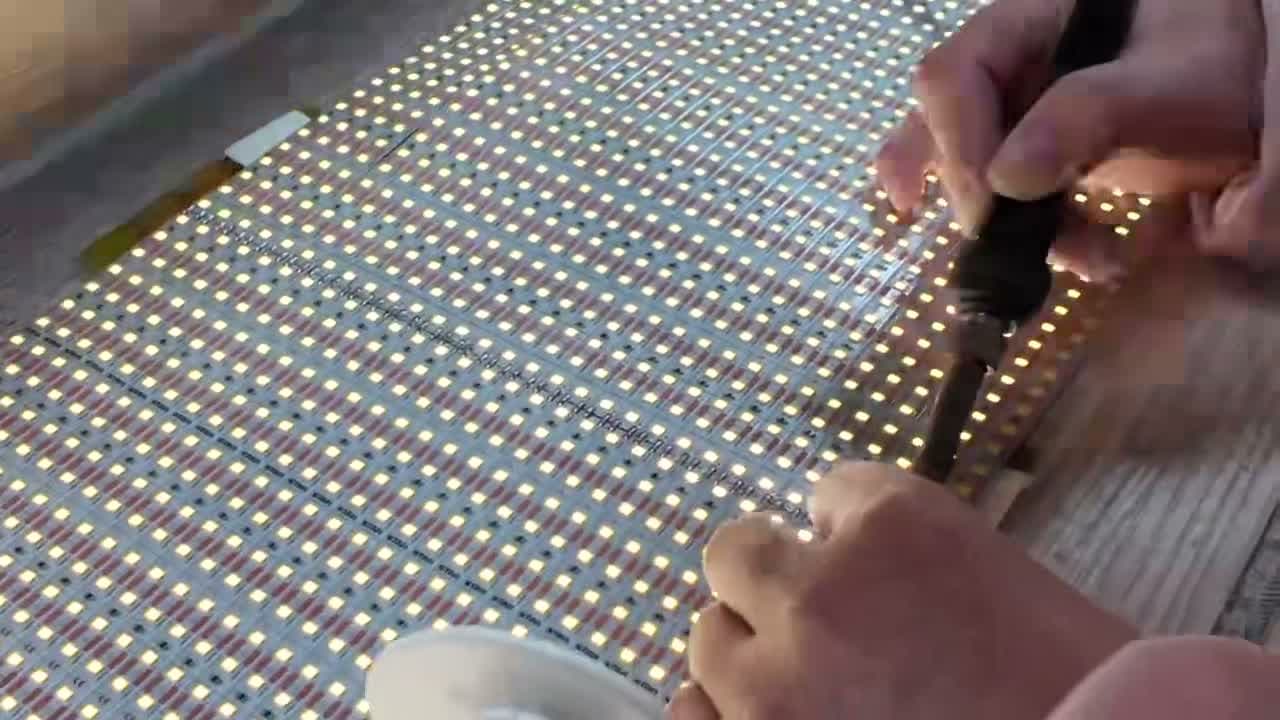
The article photograph is a real factory close-up of LED strip circuit boards illuminated during a manual check. It is contextual imagery, not an inspection result for a particular order or proof of photometric compliance.
Define the lot and the inspection unit
Connect the inspection to the purchase order, exact model and revision, declared quantity, production or batch references, and packing list. Identify which goods are complete and available for selection, and which are unfinished, held, reworked or outside the inspection. An inspector must be able to identify the population from which the sample is drawn.
Mixed models or revisions need an explicit grouping rule. Do not combine them merely because they share a carton or shipment date. Define the inspection unit too: a luminaire, driver, reel, defined strip length, kit or carton can lead to different counts. State the unit consistently in the plan and report.
| Lot record | What to define |
|---|---|
| Identity | Order, model, revision and batch references |
| Population | Quantity, unit and goods available for sampling |
| Boundaries | Mixed versions, exclusions and held goods |
| Package links | Carton, reel or unit identifiers connecting sample to lot |
Agree the sampling plan before selection
Record the applicable standard or procedure by name and version, the inspection mode and level where relevant, lot size, sample size, selection method, and acceptance and rejection rules. If the plan uses an acceptance quality limit (AQL), record the agreed value for each applicable defect category. AQL is not a universal percentage allowance for defective goods in a particular shipment.
ASQ describes Z1.4 as an attribute-sampling system for a continuing stream of lots, with normal, tightened and reduced inspection and switching rules. Do not lift a table entry from that system and silently apply it to an isolated lot. Confirm that the selected procedure fits the purchasing situation, and follow its decision rules, including any further sampling it requires.
Have the responsible quality team or inspection provider verify the applicable plan and its tables. This guide does not prescribe default AQL values or reproduce sample-size and acceptance-number tables. A value copied from another order may belong to different assumptions, counting units or inspection conditions.
Define defect categories and counting rules before inspection. Counting nonconforming units differs from counting individual nonconformities: one product may contain several findings. State what Ac and Re represent under the selected plan, and document separate acceptance conditions for checks outside that plan. Safety-critical requirements need an appropriate product-specific verification scope; changing an AQL alone cannot establish safety.
- Standard or procedure name and version
- Inspection mode, level and applicable plan
- Lot size, sample size and inspection unit
- Random selection method and access limitations
- Defect categories, counting basis and Ac/Re rules
Separate observations, measurements and documents
Write each check against an approved requirement and identify the evidence needed. A visual power-on check can establish an observed operating state; it cannot by itself substantiate CRI, CCT, flicker, ingress protection or electrical safety. Claims requiring measurement or formal testing need the appropriate method, equipment, conditions and competent personnel.
For an LED strip assembly, connect the strip, driver, controls, connections and operating configuration. For a luminaire, identify the offered optic, driver and model variant. Product-specific certificates, listings and reports remain separate document checks; inspecting a sample does not create certification.
| Evidence type | Example | Record the boundary |
|---|---|---|
| Observed | Label, packaging or illumination state | What was visible and which item was checked |
| Measured | Dimension, input power or specified optical result | Method, equipment, conditions, units and criterion |
| Documented | Drawing, listing or model-specific report | Identity, revision, scope and review outcome |
Make sample selection and findings traceable
Use the agreed random selection method across the defined lot. Supplier-selected demonstration units, convenient open cartons or a prepared display are not automatically a random sample. Record how packages and units were selected, any inaccessible goods, and departures from the plan. If access prevents the intended selection, report the limitation before treating the result as complete.
Give findings stable identifiers linked to the unit, carton or reel reference and the applicable requirement. Preserve original photographs, measured values, instrument references and relevant document extracts. State which checks were performed, omitted or inconclusive. Missing evidence is not a passing result; a generic factory photograph does not establish which lot was inspected.
Control rework, reinspection and release
When a finding requires action, identify the affected scope, containment, responsible person, proposed correction and evidence needed for closure. Record whether sorting, replacement, rework or another agreed disposition changes the lot. Keep changed goods identifiable and have the responsible quality team define the appropriate reinspection plan; do not select a convenient new sample until it passes.
Keep three decisions visible: the inspection result under its stated plan, the disposition of findings, and the authorization to release goods. They may be linked, but they are not interchangeable. A lot can meet its sampling plan's acceptance rules while a required document or excluded check remains unresolved.
Payment, shipment, concessions and other commercial actions follow the contract and the authority of the responsible parties. Record who approved what, any limitations, the final lot and packing-list references, and outstanding obligations. An inspection report alone neither rewrites payment terms nor authorizes someone to waive a requirement.
What to send Lumseq before inspection planning
Send the application, destination market, product schedule, quantities and units, approved specifications, sample references, packaging requirements and intended inspection scope. Include the proposed sampling procedure, required measurements and documents, acceptance criteria, decision owners and handling of unresolved findings. Confirm arrangements before booking an inspection or making a release commitment.
Lumseq can discuss the proposed LED strip or power-supply configuration and the documents required for the identified model. Keep product selection, inspection evidence and the final commercial decision connected to the same order revision. Receiving inspection remains a separate check of what arrives and any transport-related findings.
Frequently asked questions
Questions buyers ask
Does lot acceptance under a sampling plan mean every item is compliant?
No. Acceptance applies under the documented sampling plan and inspection scope. It does not prove every item is defect-free or replace required product-specific tests and documentation.
Which AQL should an LED lighting order use?
Agree the applicable acceptance quality limit and sampling procedure with the responsible quality team and inspection provider. There is no default value suitable for every product, defect category, market or contract.
Can a power-on photograph prove CRI, flicker or certification?
No. It records a visible operating scene. Those claims require appropriate measurements or model-specific documentation, with their methods and scope identified.
Does a passing inspection automatically release payment and shipment?
No. Authorized parties make release and payment decisions under the contract, taking account of inspection findings, unresolved requirements and agreed commercial conditions.
Sources and references
NIST/SEMATECH e-Handbook: What is acceptance sampling?NIST/SEMATECH e-Handbook: What kinds of Lot Acceptance Sampling Plans (LASPs) are there?ASQ: ANSI/ASQ Z1.4 and Z1.9 StandardsTalk to the product team
Planning an OEM or commercial lighting order?
Send your application, specification and destination market. We will help narrow the product and sample options.
Discuss on WhatsApp